
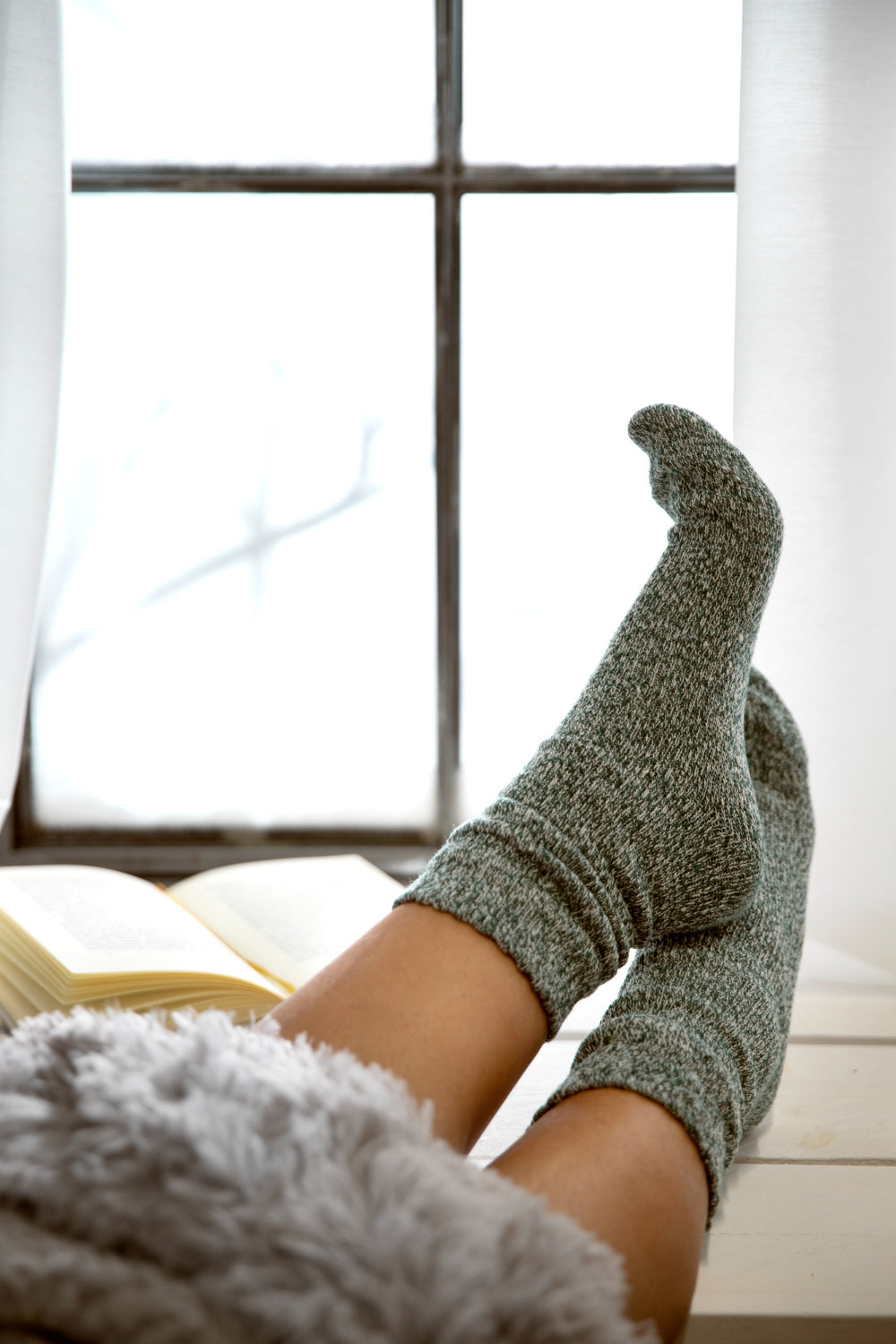
When temperatures drop, our feet disappear for many hours a day into thick socks, closed shoes, and winter boots. While this keeps them comfortably warm, it can become a challenge for the skin and the feet's natural microclimate.
Especially in autumn and winter, it is therefore worth paying a little more attention to foot care. With a few simple habits, you can prevent dry skin, unpleasant foot odor, and an uncomfortable feeling in your shoes.
Why do feet need special care in winter?
In summer, the focus is primarily on heat and heavy sweating. In winter, however, a different problem often arises: the feet spend a large part of the day in a closed, warm, and sometimes damp environment.
Thick socks and shoes that aren't very breathable can cause heat and moisture to build up inside the shoe. At the same time, the skin is put under greater stress by cold temperatures and dry heating air.
Typical problems in the cold season can therefore be:
-
dry and rough skin
-
cracked heels
-
increased sweating in closed shoes
-
unpleasant foot odor
-
soggy skin between the toes
-
an overall unpleasant climate inside the shoe
Good winter foot care should therefore take into account both the skin and the microclimate of the feet.
1. Clean feet regularly – but don't overdo it
Of course, regular washing is part of daily foot care. However, very hot water and aggressive soaps can further dry out the skin.
Lukewarm water combined with mild cleansing is better.
Especially important: dry the feet thoroughly afterward – particularly between the toes. If moisture remains there consistently, a warm, damp environment is created where unwanted microorganisms can thrive.
2. Moisturize dry skin
While it's a matter of course to apply cream to the face and hands in winter, the feet are quickly forgotten.
Yet the skin on the heels and soles of the feet can dry out severely in the cold months. A suitable foot cream helps to keep the skin supple and prevent heavy calluses or small cracks.
Applying care in the evening is best. This allows the cream to absorb overnight without having to put shoes on immediately afterward.
A quick tip: try to keep as little cream as possible between the toes, as this area is better kept dry.
3. Change shoes regularly
Anyone who wears the same winter boots or sneakers every day hardly gives the shoes a chance to dry out completely.
Regular rotation is therefore sensible, especially with closed shoes. Ideally, shoes should be able to air out for several hours or even an entire day after being worn.
If possible, insoles can also be removed and dried separately.
This not only improves comfort but can also help reduce the development of unpleasant odors.
4. The right socks make a difference
It is not just the shoe, but also the choice of socks that influences the foot climate.
Socks should be able to absorb moisture as well as possible or wick it away from the foot. Which materials feel most comfortable is a matter of individual preference.
Crucially: if your feet get damp, your socks should be changed.
Those who tend to have sweaty feet can keep an extra pair of socks handy, especially on long work days or when traveling.
5. Foot odor is not caused simply by sweat
A widespread misconception is that sweat itself is responsible for typical foot odor.
Fresh sweat is initially largely odorless. The typical unpleasant smell arises primarily when certain microorganisms break down components of sweat and skin. This process creates odor-intensive metabolic products.
Therefore, modern foot care should not just try to mask sweat or odor with strong fragrances.
This is precisely where Heidis Best Probiotic Foot Spray comes in.
Probiotic foot care with Heidis Best
Heidis Best Probiotic Foot Spray pursues a different approach than classic foot deodorants.
After activation, probiotic Lactobacillus cultures are distributed on the foot. They support an environment that is unfavorable for odor-causing microorganisms, thereby tackling the root cause of foot odor instead of just covering it up with perfume.
Particularly practical in the cold months: the spray is designed as a single application. It does not need to be reapplied every morning like a classic foot deodorant.
Heidis Best is also:
-
perfume-free
-
aluminum-free
-
easy to use
-
specifically developed for long-term control of foot odor
Especially when feet spend many hours a day in closed shoes during autumn and winter, microbiome-based foot care can therefore be a useful addition to your daily routine.
6. Remove calluses regularly – but carefully
Some callus on the feet is completely normal. It protects heavily stressed areas from pressure and friction.
However, if the callus becomes very thick, it can become dry and cracked.
After showering or bathing, excess callus can be reduced carefully with a suitable file, for example. Aggressive cutting or heavy sanding should be avoided, as this can cause injuries.
Less is often more here.
7. Keep an eye on your feet, even in winter
Since feet are often completely covered in winter, minor skin changes are sometimes noticed much later than in summer.
It is therefore worth checking for changes regularly – for example:
-
unusual redness
-
pressure marks
-
small cracks
-
changes to the nails
-
heavily softened skin between the toes
The sooner changes are noticed, the easier they are generally to treat or have professionally assessed.
The ideal winter routine for well-groomed feet
Good foot care does not have to be complicated.
A few small habits can make a big difference:
In the morning:
Put on clean, dry feet and fresh socks.
During the day:
Ensure the most comfortable shoe climate possible and change socks if you are sweating heavily.
In the evening:
Clean feet, dry thoroughly, and apply cream to dry skin as needed.
Regularly:
Change and air out shoes, care for nails, and carefully remove excess callus.
In the case of recurring foot odor, you can also use a product that doesn't just try to mask the smell in the short term but addresses how it forms – like Heidis Best Probiotic Foot Spray.
Conclusion: Foot care is important in winter too
Our feet do an enormous amount of work every day – and they spend a particularly large amount of time in closed shoes during the cold months.
A combination of good hygiene, careful drying, skin care, regular shoe changes, and a healthy shoe climate creates the best conditions for your feet to feel comfortable even in winter.
And for those who also struggle with unpleasant foot odor, Heidis Best Probiotic Foot Spray can specifically target the source of the odor – the microbial balance on the skin.
Because well-groomed feet are not a matter of the season.



Teilen:
Why normal foot deodorant doesn't really eliminate foot odor — and what three studies say about the real solution